
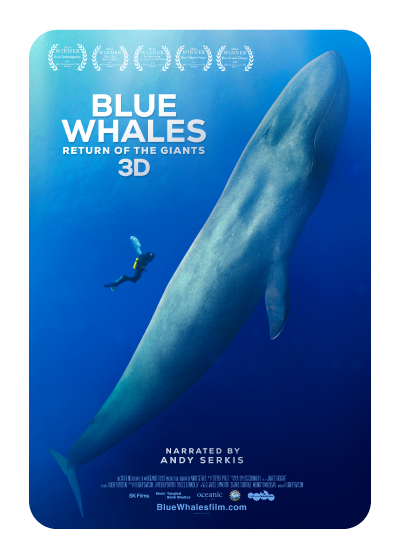
Blue Whales: Return of the Giants
Blue Whales: Return of the Giants was more than a giant-screen film — it was the anchor for a nationally coordinated outreach effort designed to turn awe into action. Supported by the National Science Foundation, the film reached audiences on approximately 52 giant screens worldwide, engaging an estimated 2.5 million viewers.
Working in partnership with libraries, museums, and national networks such as STAR Net, the project delivered educational materials, facilitation guides, professional development, digital experiences, and locally driven programming — with nearly 30 libraries and museums hosting community events in support of the film.
Using the blue whale, an icon of the ocean, as a hook for audience engagement, the campaign invited audiences to look closer to home. Participants explored cutting-edge marine research alongside how those same observation, documentation, and data-collection techniques can be applied to species and ecosystems in their own neighborhoods. By connecting global ocean science with local exploration and stewardship, the initiative empowered communities to see themselves as active participants in the scientific process.

Highlights

2.5M
viewers experiences the wonder of blue whales across 52 giant screens worldwide

3
free education modules developed with the California Science Center, connecting blue whale biology to wildlife exploration for grades 3–5

200+
community events hosted by 19 library partners in the U.S., bring the film's science outreach beyond the theater
2
interactive apps developed to help audiences visualize and engage with blue whale biology

Initiative
Giant screen films offer immersive experiences, but not all communities have access to IMAX or giant screen theaters. The outreach program for Blue Whales used the creative from the film and the hook of the largest ocean animal as a jumping off point for a free library program suite of activities thoughtfully designed to build ecological awareness among grade 3-5 audiences. The goal: spark curiosity, encourage backyard exploration, and make connections to scientists and the processes they use to discover and examine the world around them.

Screenings & Events
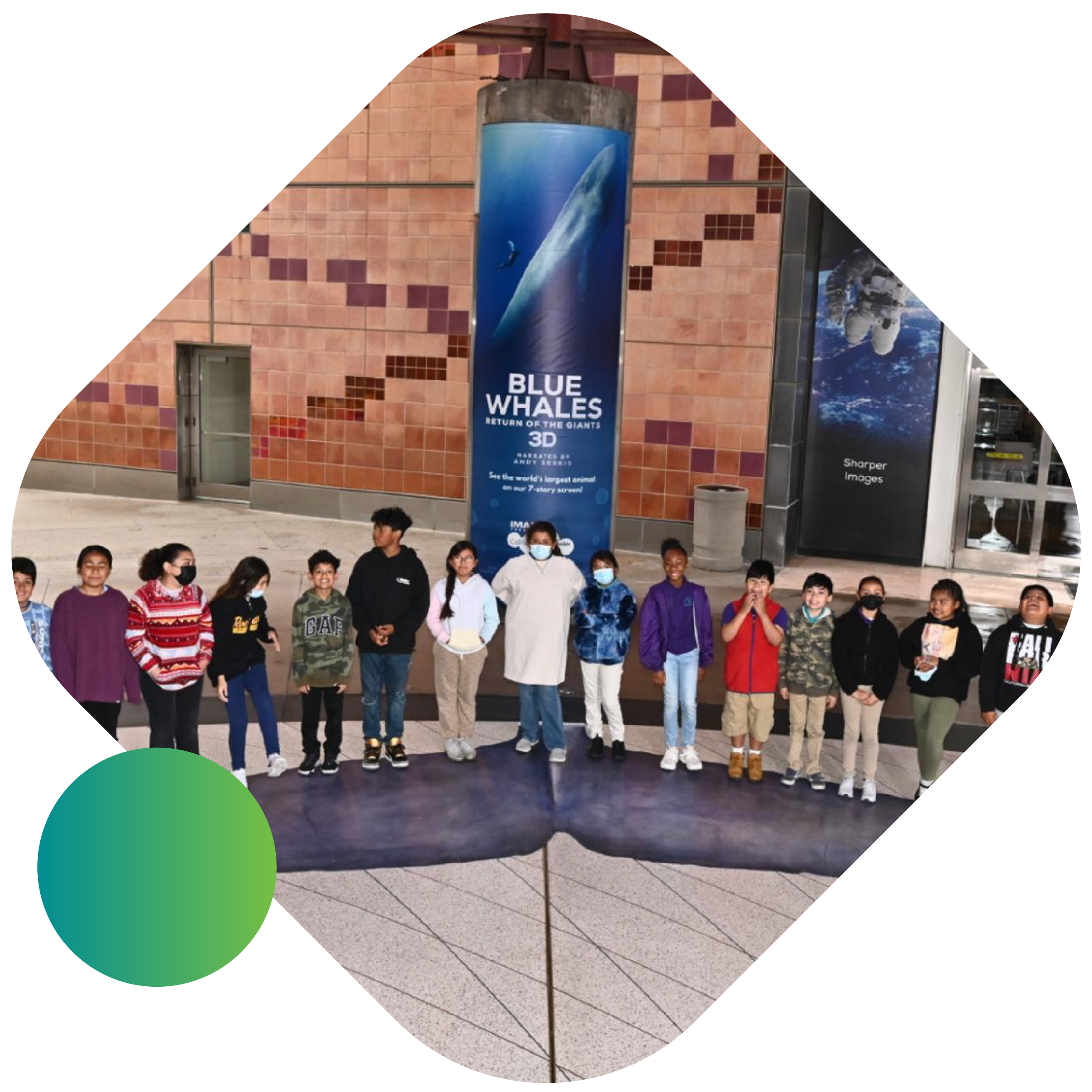
- Blue Whales premiered in May 2023 at the California Science Center with a full day of screenings for local school groups. Students heard from the scientists featured in the film and got hands-on with a full-size blue whale replica and interactive apps that put the whale's massive scale into perspective.
- The film screened at more than 52 IMAX theaters at science centers and museums across the U.S., including Chicago, Atlanta, and Boston.
- Library and science center partners hosted 200+ community events across the U.S., extending the film's reach well beyond the giant screen.
- The film also screened at Blue Whales Week in Loreto, Mexico, where local audiences of all ages — including several school groups — met the researchers studying whales along the coast firsthand.

Everyone assumes that because blue whales are the largest mammals on the planet, we should know a lot about them, but in fact, that’s not the case. Learning what scientists are trying to do, to understand their behaviors, has been a real education for me. We need to find out more about creatures like these because they inspire us to have hope. The film is a wonderful marriage of storytelling, fact-giving and entertainment.

Educational Outreach
In the classroom and community
Together with the California Science Center, we developed free educational resources to bring the world of blue whales to curious minds anytime, anywhere — no IMAX theater required.
- Blue whale education modules: Three activity modules bridge blue whale biology with backyard-scale ecology, each focused on a key behavior or trait: communication, feeding, and size. Each module includes bilingual videos hosted by science educators Monica Barajas and Mariela Lopez, hands-on activities for museums and libraries, and expert "Whale Talk" videos with biologist Dr. David Cade of the Hopkins Marine Station.
- Nature stewardship guide: A collection of hands-on outdoor activities designed to build close observation skills and deepen empathy with local wildlife and wild spaces.
- Storytime toolkit: Four short stories recorded in collaboration with Dr. Joseph Bruchac, an Abenaki Elder and scholar of Native American culture, exploring nature stewardship, community, and communication.
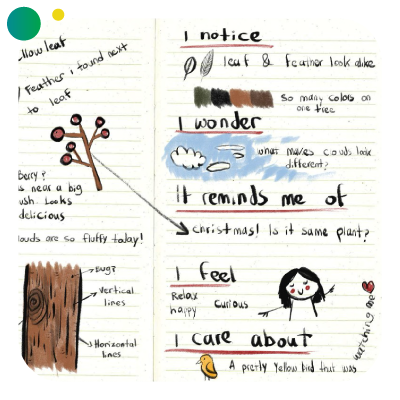
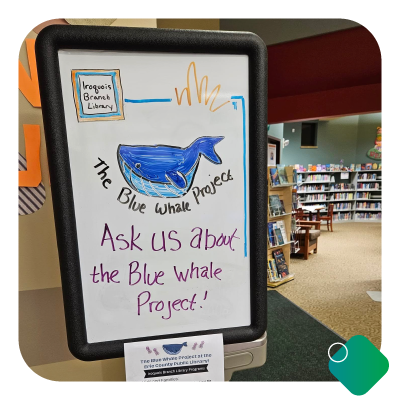
In libraries
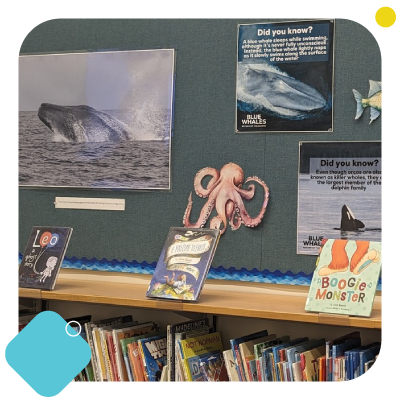
A mini-grant program helped libraries across the country build ecological awareness and local partnerships using materials from the film — leveraging each library's unique expertise to connect their communities with themes from the film.
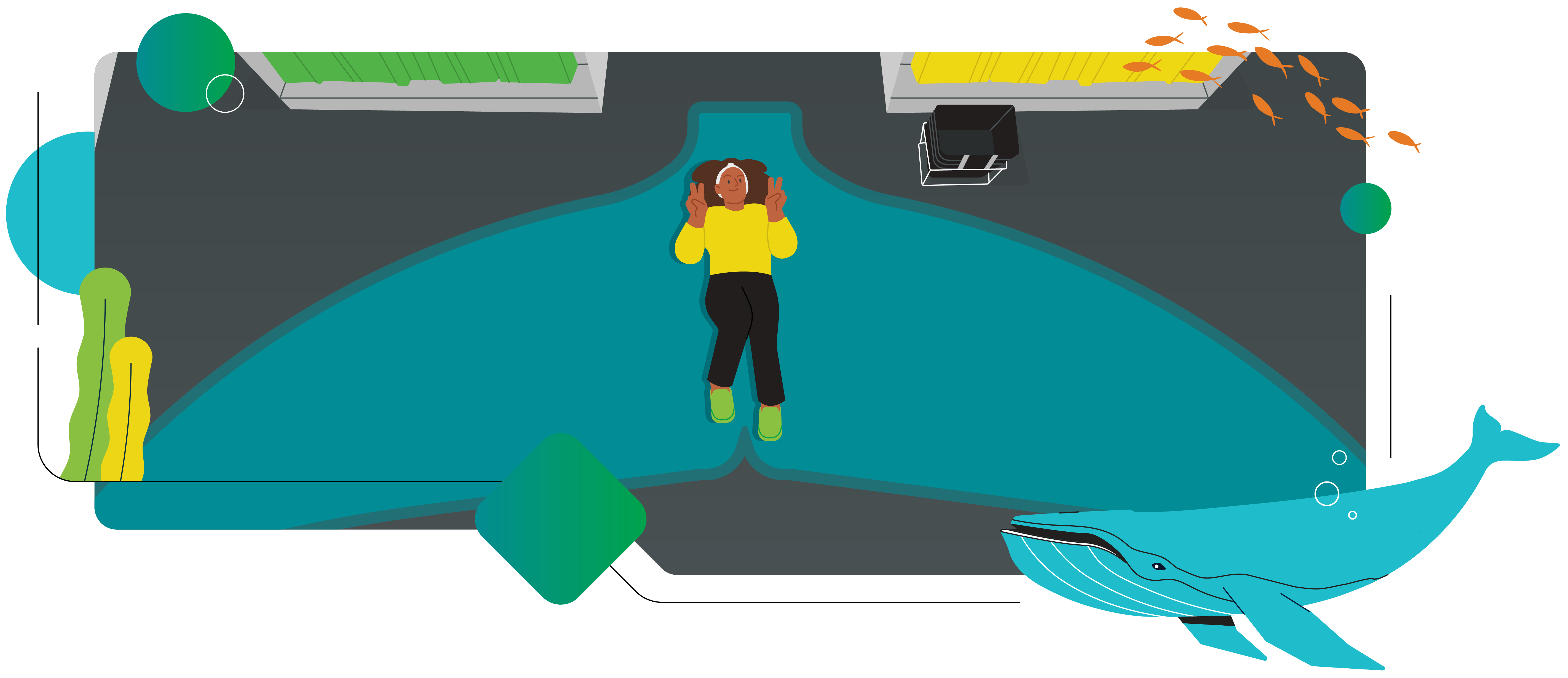
- Life-sized blue whale tail: A true-to-scale vinyl mat of a blue whale tail was delivered free to each library grant recipient and more than a dozen giant screen theaters, offering an awe-inspiring and tangible learning moment about blue whale size and physiology.
- 12-minute community film: A shortened version of the film designed for community outreach events, perfect as a kickoff for discussions or hands-on activities for audiences unable to visit a giant screen theater.
- “Exploring Science & Nature” Facebook community: An online community of 250+ libraries sharing resources, event outcomes, and best practices for engaging audiences around informal science education.
In apps
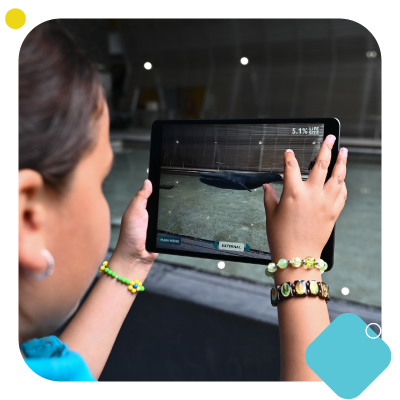
In tandem with the film's hands-on resources, the Blue Whalescampaign developed two interactive apps to capture the awe of these incredible animals and promote interdisciplinary learning.
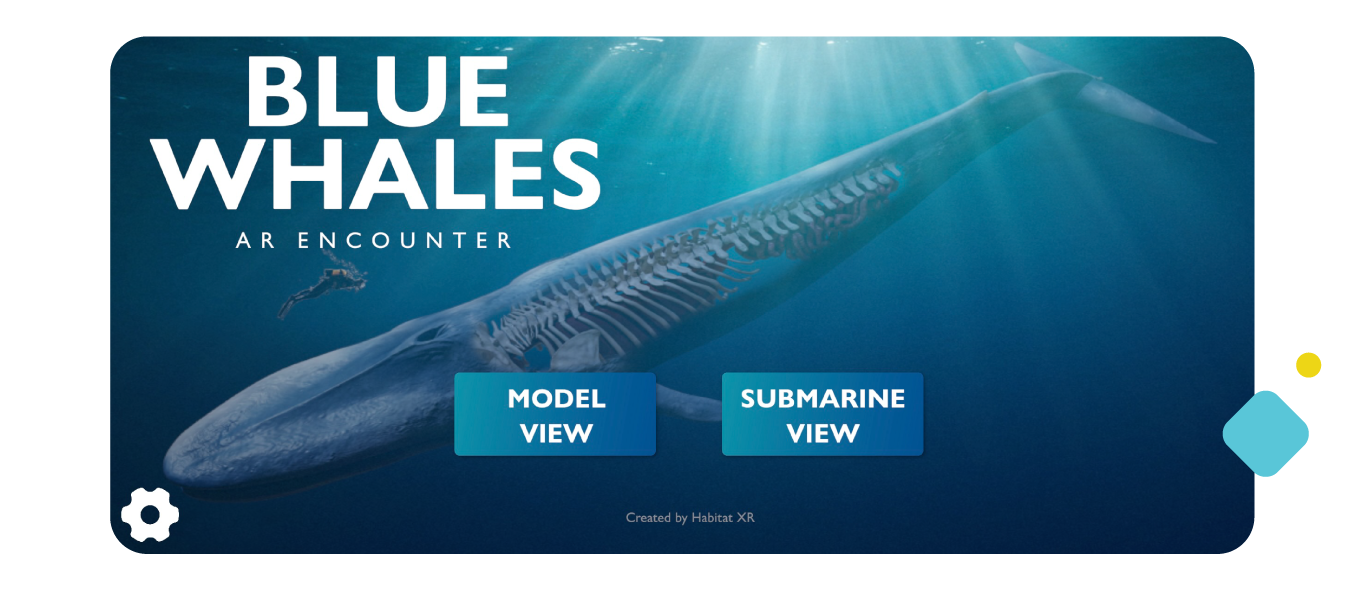
- Blue Whale AR Encounter: An augmented reality experience that lets users bring a full-scale blue whale into any setting — exploring the whale's inner anatomy and key behaviors like the lunge gulp alongside scale references.
- Whale Beats: Designed by the California Science Center to deepen understanding of marine wildlife communication and the threats posed by noise pollution — then lets users compose their own music using whale and ocean sounds.

Partnerships
HHMI Tangled Bank Studios partnered with leading national organizations and scientific experts in informal and community-based education, including:
- California Academy of Sciences
- STAR Library Network (STAR Net)
- National Science Foundation
- 19 public libraries from Virginia Beach to Monterey, California
- A consortium of eight science museums serving as advisors on both the film and its educational outreach

Press Coverage
Hollywood Reporter
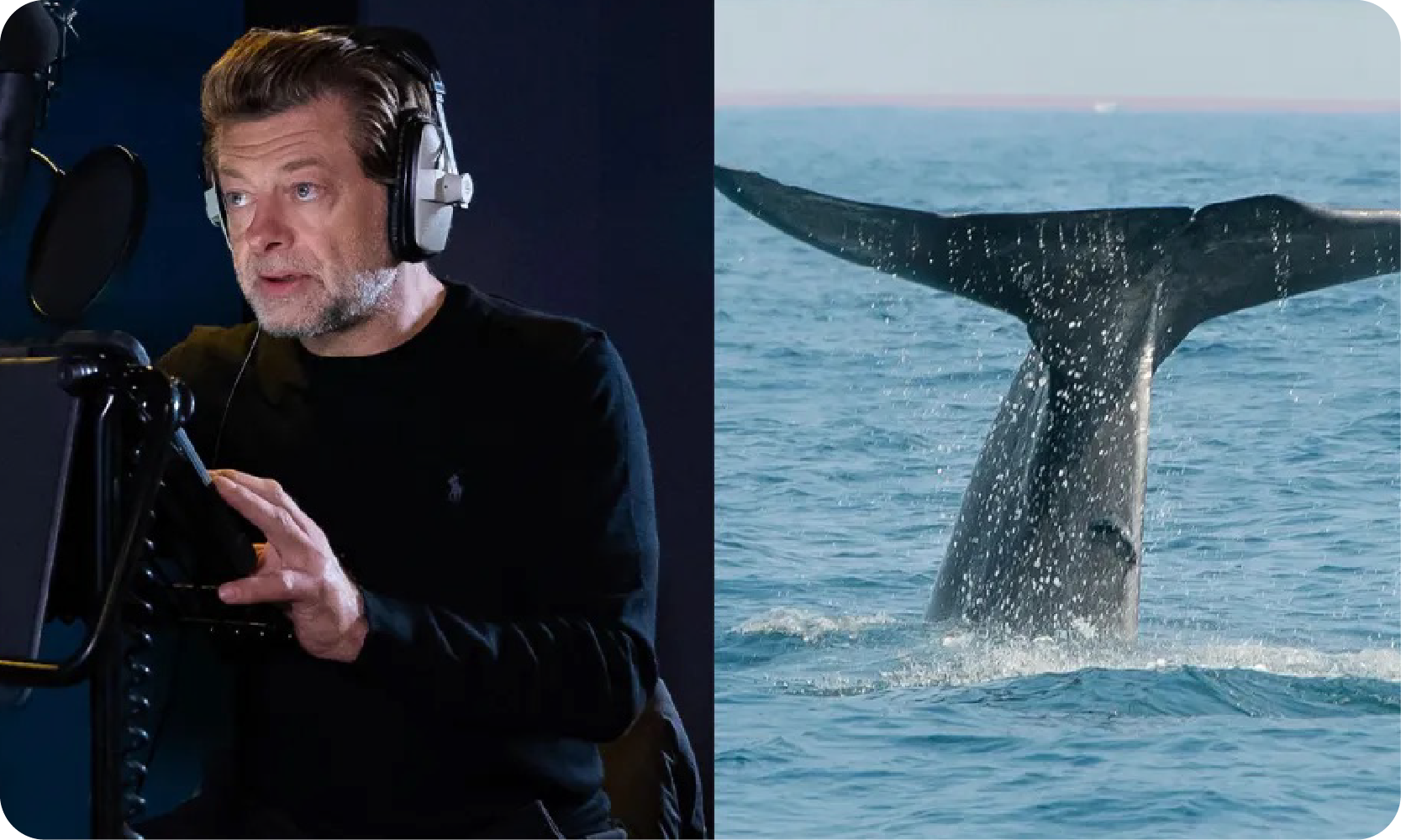
Blue Whales: Return of the Giants trailer gives an in-depth look at the world's biggest animals — with help from Andy Serkis
Macaroni Kid
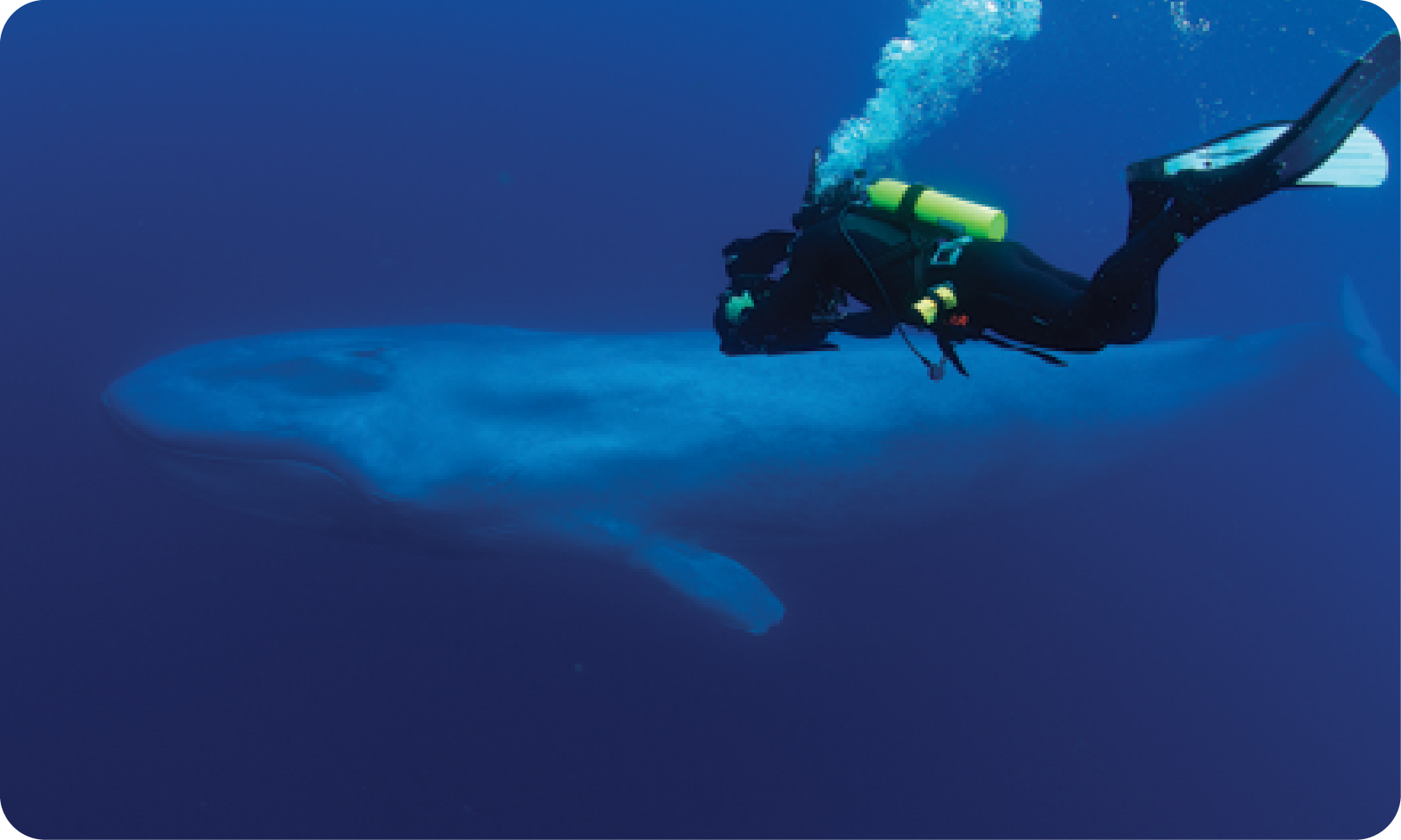
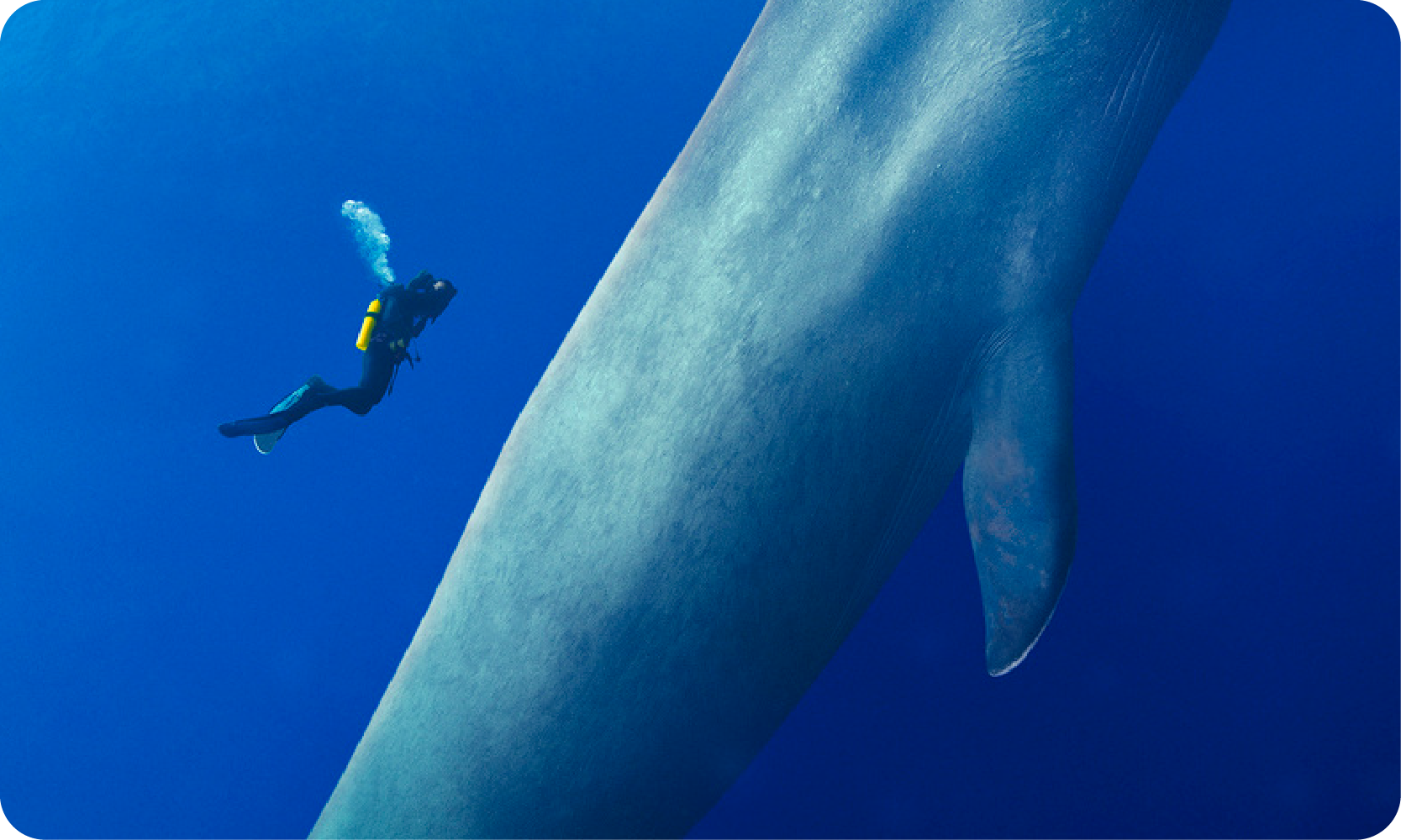
Blue Whales: Return of the Giants 3D at the California Science Center
This once-in-a-lifetime adventure not only brings us never-before-seen blue whale footage, but also transforms our understanding of the entire species. Viewers will discover newfound hope in the future of our oceans through the return of the spectacular blue whale.

About the Film
Blue Whales: Return of the Giants takes viewers into the world of the magnificent blue whale, a species rebounding from near extinction. The film follows two scientific expeditions — one searching for a missing population off the Seychelles Islands, the other chronicling whale families in Mexico's stunning Gulf of California — transforming our understanding of the world’s largest animal.
Audiences discover the whale's almost incomprehensible size, its spectacular feeding habits, its surprising role in ocean health, and the remarkable long-distance communications that connect individuals across vast distances. Joined by dolphins, sperm whales, sea lions, and orcas, the blue whale finally gets its star turn — in life size, on the giant screen!
Learn More
Dive into Blue Whales: Return of the Giants, view the trailer, read reviews and press coverage, and learn where to watch.